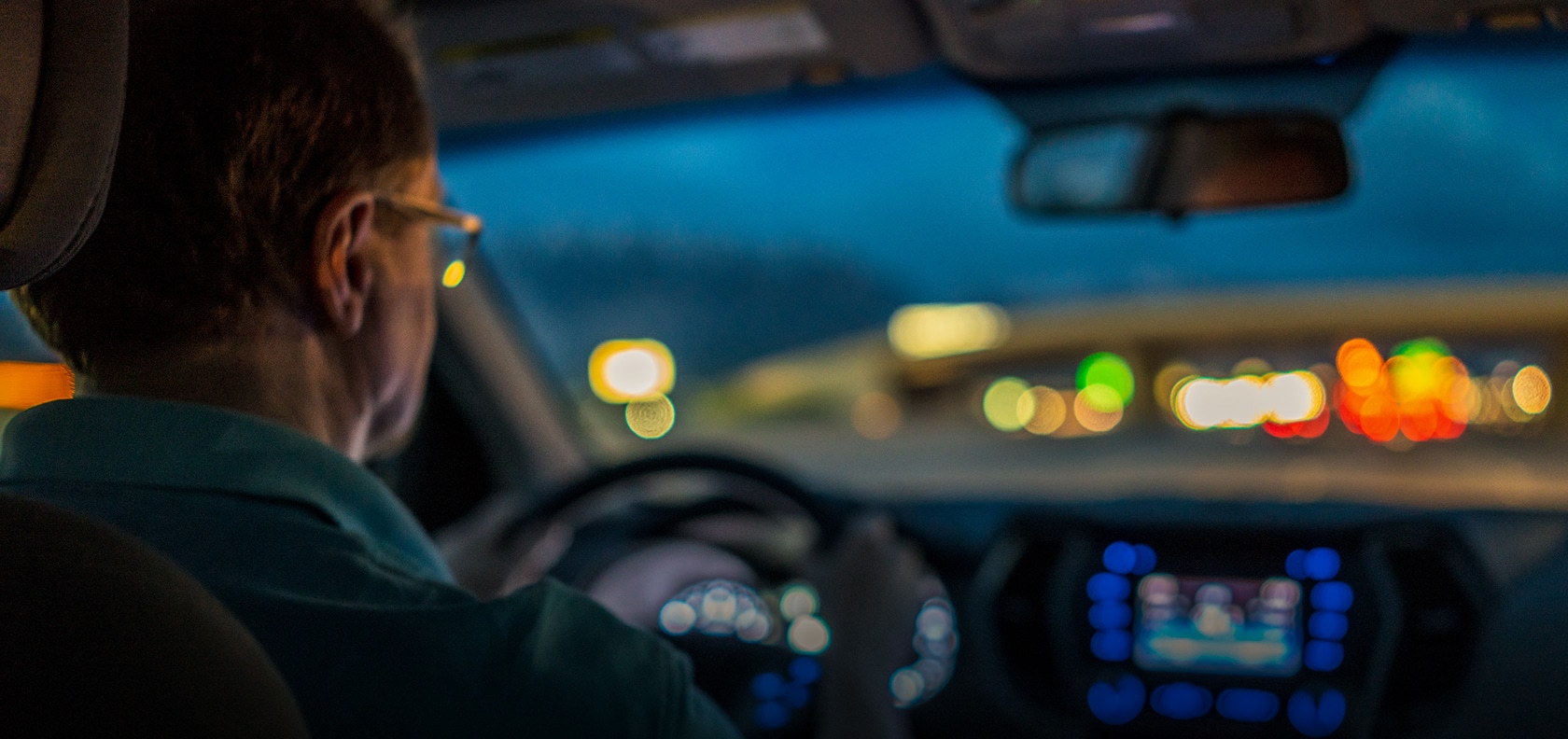
Night driving comes with its own set of challenges. When it gets dark, it’s harder to see what’s ahead, judge distances, or spot things out of the corner of your eye. Headlights from oncoming cars can cause glare and make it tough to see for a few seconds. Even with your high beams on, you can only see about 500 feet in front of you, and regular headlights cut that distance in half. With less time to react, it’s important to stay alert for anything unexpected on the road, like animals or sudden changes in traffic.
According to the National Highway Traffic Safety Administration (NHTSA), 39,254 people died in traffic crashes in 2024. Despite a decline in fatalities over a couple of years, there were 20,971 nighttime fatalities (6 p.m. to 5:59 a.m.) in 2024, compared to 22,219 in 2023.
When you drive at night, your risk of an accident goes up. If you can’t see as well or you’re feeling tired, even a small mistake can lead to a costly insurance claim or higher premiums. Staying alert and cautious can help you avoid these problems.
Tips for safer driving at night
1. Check your lights regularly
Before you drive at night, make sure your headlights and taillights are clean and working. If your lights are dirty or not working, it’s harder for you to see and for others to see you.
2. Slow down and keep your distance
At night, slow down and give yourself extra space from the car in front of you. Since you can’t see as far, you’ll need more time to react if something pops up.
3. Use high beams cautiously
High beams help you see farther on dark roads but remember to dim them when another car is coming or when you’re following someone. This keeps everyone safer.
4. Avoid headlight glare
Avoid looking right at oncoming headlights, since that can make it hard to see. Focus on the right edge of your lane to reduce glare and help you stay on course.
5. Keep windows and mirrors clean
Keep your windshield and mirrors clean so you can see clearly at night. Dirt and streaks make glare worse and make it harder to see the road.
6. Be vigilant for people and animals
It’s harder to spot people, cyclists, and animals at night. Keep an eye on the sides of the road and be ready to stop if something shows up.
7. Don’t drive drowsy
If you feel tired, take a break before you drive. Driving drowsily slows your reaction time and makes it harder to make good choices.
8. Eliminate distractions
Put your phone and other distractions away so you can focus on driving. Staying alert is even more important at night when it’s harder to see hazards.
9. Be extra careful on unfamiliar roads
If you’re driving somewhere new or on winding roads, slow down. Curves and obstacles can appear quickly in the dark.
10. Get regular eye exams
Get your eyes checked regularly to make sure you can see well at night. Good vision helps you spot hazards and read signs after dark.
And make sure your Mapfre auto insurance and home policies are up to date by contacting an independent agent in your state. And if you are not a Mapfre customer yet, you can always get a fast, free car insurance quote to get outstanding coverage at a great price.